
How to Find Community as an Adult Without Feeling Awkward (5 Steps)

Let’s just get this out there: trying to find community as an adult is brutal. Not “oh I’m a little shy at brunch” brutal. I mean that specific kind of brutal where you can be surrounded by people all day and still feel like you’re watching life through glass.
Like, how did we go from bonding over juice boxes and being assigned the same table in elementary school… to this? Now we’re in our 30s and 40s, sitting on the couch on a Friday night, doomscrolling, telling ourselves we love our peace when the truth is we feel left out, disconnected, and kinda embarrassed about it.
And the embarrassing part is the sharpest. Because saying “I don’t really have people” sounds like admitting you failed some basic human requirement. Like everyone else got the memo on how to keep friendships alive while working, parenting, surviving relationships, dealing with anxiety, depression, and whatever fresh hell the news served up this week… and we didn’t.
Here’s the no-bullshit truth: loneliness is everywhere. It’s common. It’s not a character flaw. But it still hurts like a bastard. And the friction of trying to find “your people” is real. You try once, it’s awkward. You try twice, it’s awkward and you start thinking, “Okay cool, maybe I’m just not built for this.”
But we are. We’re just out of practice. And a lot of us are trying to build something real in a world that’s trained us to keep everything casual, detached, and easy to ghost.
So yeah — it’s going to feel awkward. It’s going to feel cringey. You’re going to overthink every text you send like you’re defusing a bomb. The question isn’t how to avoid the awkwardness. The question is: can we walk straight through it anyway?
Here are five steps that are actually doable, without turning into a fake-extrovert or performing some shiny, “put yourself out there!” version of you that doesn’t exist.

Step 1: Start With the People You Already Know (Even the Ones You Barely Know)
This might sound obvious, but we overthink this one all the time. We think we need to find entirely new people, join some club we have zero interest in, or download another godforsaken app. But honestly? Start with the people already in your orbit.
That coworker you sometimes chat with in the break room? The neighbor you wave at? The person you see at the coffee shop every Tuesday? These are your starting points. Not because they're going to become your best friends tomorrow, but because they already exist in your life and that removes like 70% of the initial awkwardness.
Ask them to grab coffee. Mention something you're doing this weekend and see if they want to tag along. Or, and this is key, ask if they want to introduce you to their friends. Sometimes our people know our people, and we just haven't connected the dots yet.
The beauty of this approach is that it's low-pressure. You're not proposing marriage or suggesting they become your new BFF. You're just... spending time together. Seeing what happens. Letting things develop naturally instead of forcing them.
Step 2: Say Yes More Often (Even When Your Anxiety Says No)
Look, I know the couch is comfortable. I know that going to that thing, whatever that thing is, sounds exhausting and you're already rehearsing your excuses. Trust me, I get it. But here's the uncomfortable truth: community doesn't come to you. You have to actually show up.

This doesn't mean saying yes to everything and burning yourself out. It means saying yes to things that sound even remotely interesting, even if the idea of making small talk makes you want to fake your own death.
Hobby meetups. Classes. Book clubs. Trivia nights. Concerts. Whatever. The activity itself matters less than the consistency and the shared interest. When you show up to the same places repeatedly, people start recognizing you. That regular recognition is what transforms strangers into acquaintances and eventually into actual friends.
And yeah, the first few times will feel weird. You might stand in a corner wondering what you're doing with your life. That's normal. Push through it. The awkwardness fades faster than you think, especially when everyone else there is also trying to figure out where they fit.
Step 3: Take Initiative and Send the Group Text
This is where a lot of us get stuck. We wait for other people to organize things, to extend invitations, to do the emotional labor of bringing everyone together. And then we wonder why nothing happens.
Here's your permission to just... do it yourself. Pick something you actually want to do, a new restaurant, a local show, a weird art exhibit, a hike, whatever, and send a mass text to like 10 people. Make it specific. Not "we should hang out sometime" but "I'm going to this food truck festival on Saturday at 2pm, who wants to come?"
Most people won't be able to make it. That's fine. That's expected. You're not trying to get everyone, you're trying to get anyone. Even if two people show up, that's a win. Do this weekly or every other week, and suddenly you've created momentum.
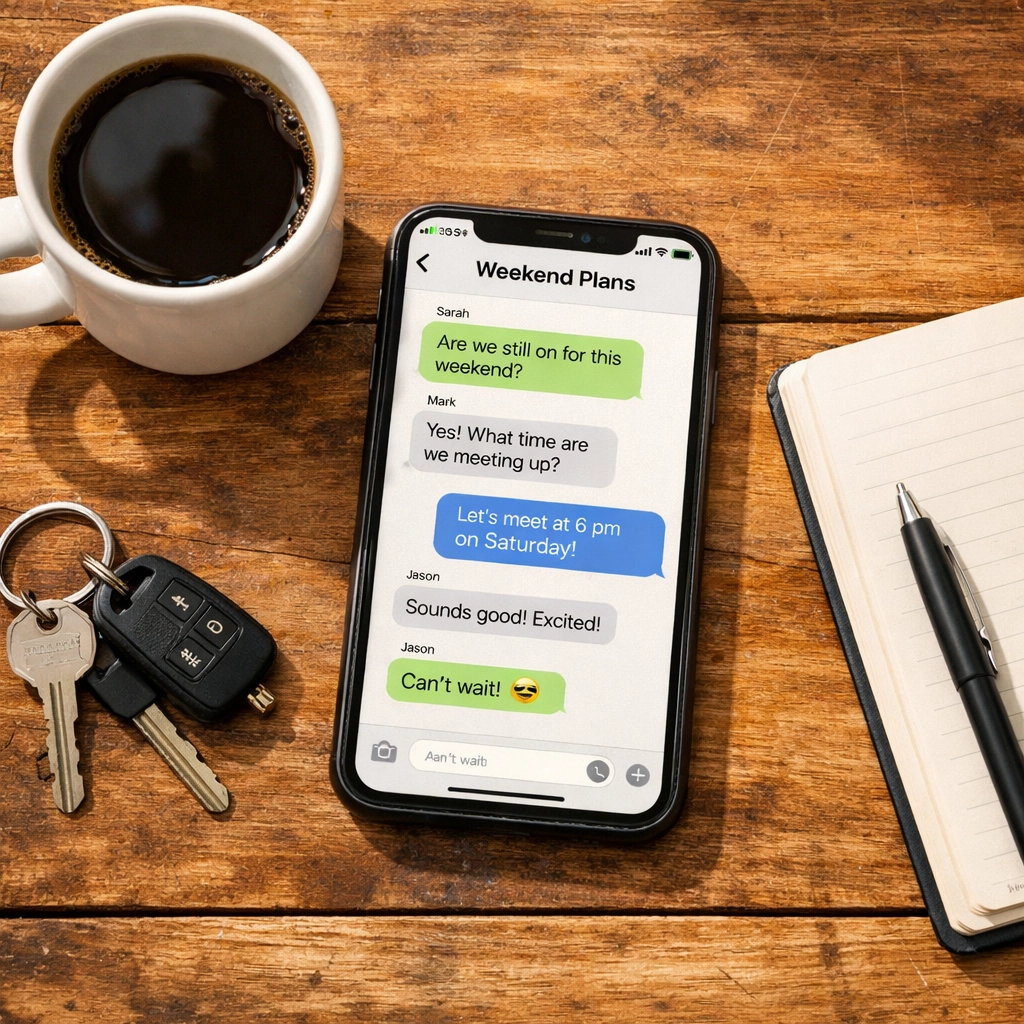
The key here is removing the decision fatigue. Don't ask what people want to do or when they're free. Just make a plan and let them opt in or out. It sounds bossy, but it's actually a gift, you're taking away all the back-and-forth negotiating that kills most social plans before they start.
And look, some people are going to flake. Some won't respond. Some will say yes and then cancel. That's not a reflection on you, that's just adult life being messy and complicated. Keep going anyway.
Step 4: Create Something Recurring and Consistent
Once you've got a few people who seem down to hang out semi-regularly, turn it into a thing. Not a formal, pressure-filled commitment, but a loose, recurring structure that people can count on.
Weekly game nights. Sunday morning coffee. Thursday trivia. A rotating dinner club where different people volunteer to choose the restaurant each week. Whatever works for your schedule and interests.
The genius of this approach is that it removes the constant effort of organizing. Instead of texting everyone each week asking "so what are we doing?", you just have a standing thing. People know it exists. They can show up or not based on their availability, but the structure is there.
One approach that works really well: create a shared group chat or document where different people volunteer to "host" each week, they pick the activity and send the details. This distributes the organizing burden so no one person burns out from always being the planner.
The regularity is what transforms a random group of acquaintances into actual community. It's the repetition, the inside jokes that develop, the shared history that builds over time. You can't force that, but you can create the conditions for it to happen.
Step 5: Commit to Actually Showing Up (Especially When You Don't Feel Like It)
Here's the hardest part, and I say this as someone who constantly wants to cancel plans the day of: you actually have to go.

Not every time. You're allowed to have boundaries and off days. But if you want to move relationships beyond the surface level, if you want to build genuine community, you have to prioritize it. That means showing up weekly, even when you're tired, even when Netflix sounds better, even when your anxiety is whispering that everyone secretly hates you.
Deep friendships don't happen from seeing someone once a month. They happen from consistent, regular contact. From being present through the mundane stuff, not just the Instagram-worthy moments. From proving to people, and to yourself, that you're actually invested.
This is where a lot of us fail. We do the initial work, we make the plans, we show up a few times, and then life gets busy or we get discouraged and we let it fade. And then we're back where we started, wondering why we can't seem to build lasting connections.
The truth is, building community is a practice, not an event. It's something you commit to over and over again, even when it feels awkward, even when you're not sure it's working, even when you're convinced everyone there is cooler and more put-together than you.
The Uncomfortable Truth About All of This
None of these steps will feel natural at first. You're going to second-guess yourself. You're going to feel awkward. You're going to have moments where you think "what the hell am I doing?" and consider just embracing hermit life forever.
That's all part of it. The awkwardness isn't a sign you're doing it wrong, it's a sign you're doing something vulnerable and real. And that's exactly what building community requires.
We've been sold this story that friendships and community should just happen organically, that if we have to try this hard it must mean something's wrong with us. But that's bullshit. Adult friendships take effort and intention. They always have. We've just forgotten how because we've been so isolated for so long.
So yeah, it's going to feel weird. Do it anyway. Send the text. Show up to the thing. Keep showing up even when it's uncomfortable. Because on the other side of that awkwardness is something we all desperately need: the feeling of being known, of belonging, of having people who actually give a shit about how you're doing.
And honestly? That's worth feeling a little weird for.
