
The Doomscroll Trap: What Your Screen is Really Doing to Your Soul
![[HERO] The Doomscroll Trap: What Your Screen is Really Doing to Your Soul](https://cdn.marblism.com/eVEvAMU2Omn.webp)
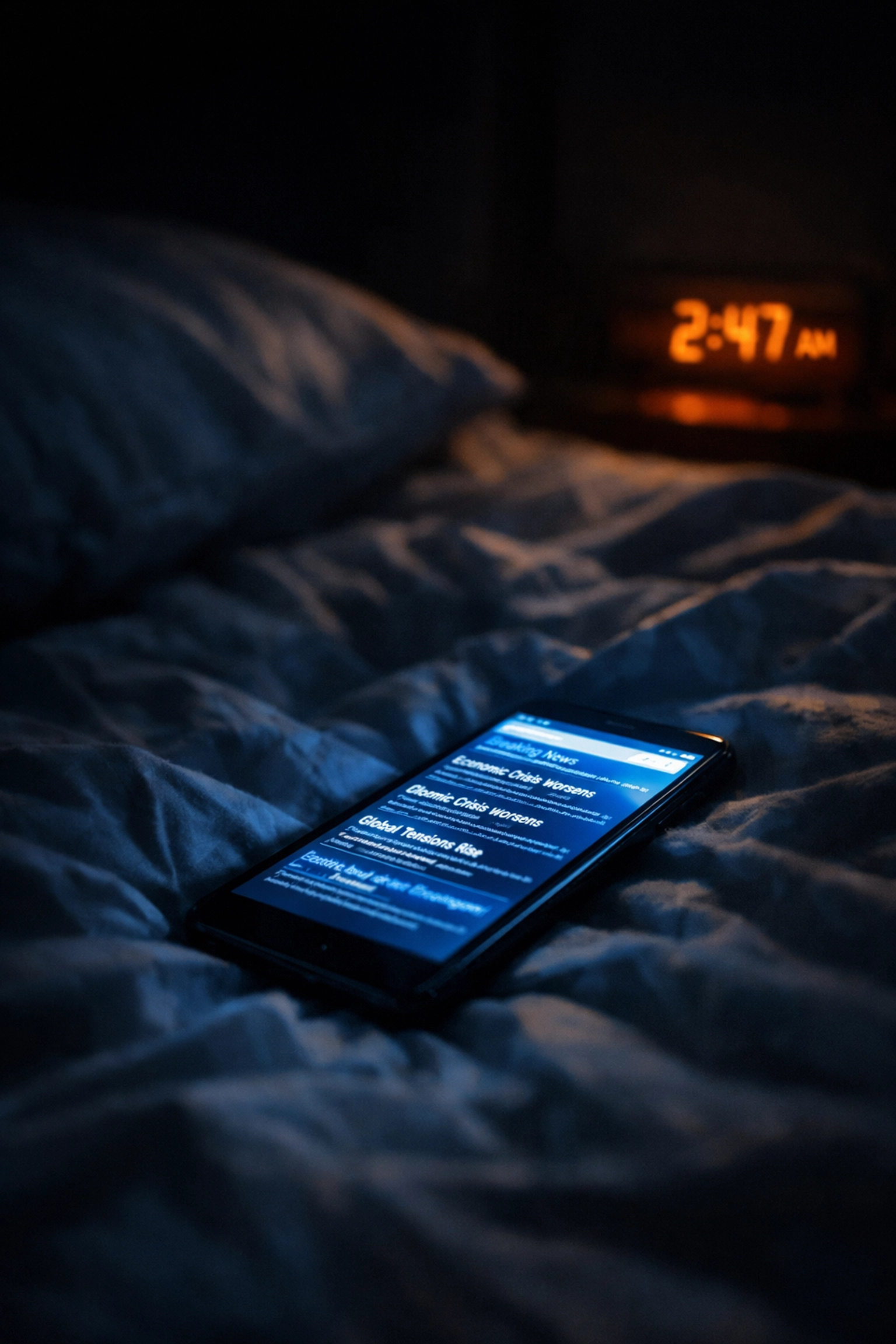
It's 2:47 AM and I'm still scrolling.
My thumb moves automatically, swipe, tap, swipe, through an endless feed of bad news, hot takes, arguments between strangers, and whatever fresh catastrophe just hit the internet. My eyes burn. My neck aches. I know I should put the phone down. I know I need sleep. But there's this feeling, right? This nagging sense that if I stop now, I'll miss something important. Something I need to know to feel... what? Safe? Informed? In control?
Except I don't feel any of those things. I feel like shit.
Welcome to the doomscroll trap, friends. And if you're reading this, chances are you know exactly what I'm talking about.
What the Hell Is Doomscrolling Anyway?
Let's start with the basics. Doomscrolling is what happens when we compulsively consume large amounts of negative content online, news, social media posts, comment sections that make you lose faith in humanity. We scroll and scroll and scroll, feeding ourselves an endless buffet of anxiety-inducing information that we genuinely cannot stop consuming.
It's not just "being on your phone a lot." It's that specific flavor of being trapped in a loop where every swipe brings another piece of bad news, and somehow you can't look away. It's the digital equivalent of picking at a scab, you know it's making things worse, but your hand keeps going back.
The term exploded during 2020 (gee, wonder why), but the behavior? That's been building for years. We've all been training for this Olympic sport of self-destruction, and most of us don't even realize we're competing.
What It's Actually Doing to Your Brain
Here's the thing nobody wants to hear: doomscrolling isn't just a bad habit. It's literally rewiring how our brains work.
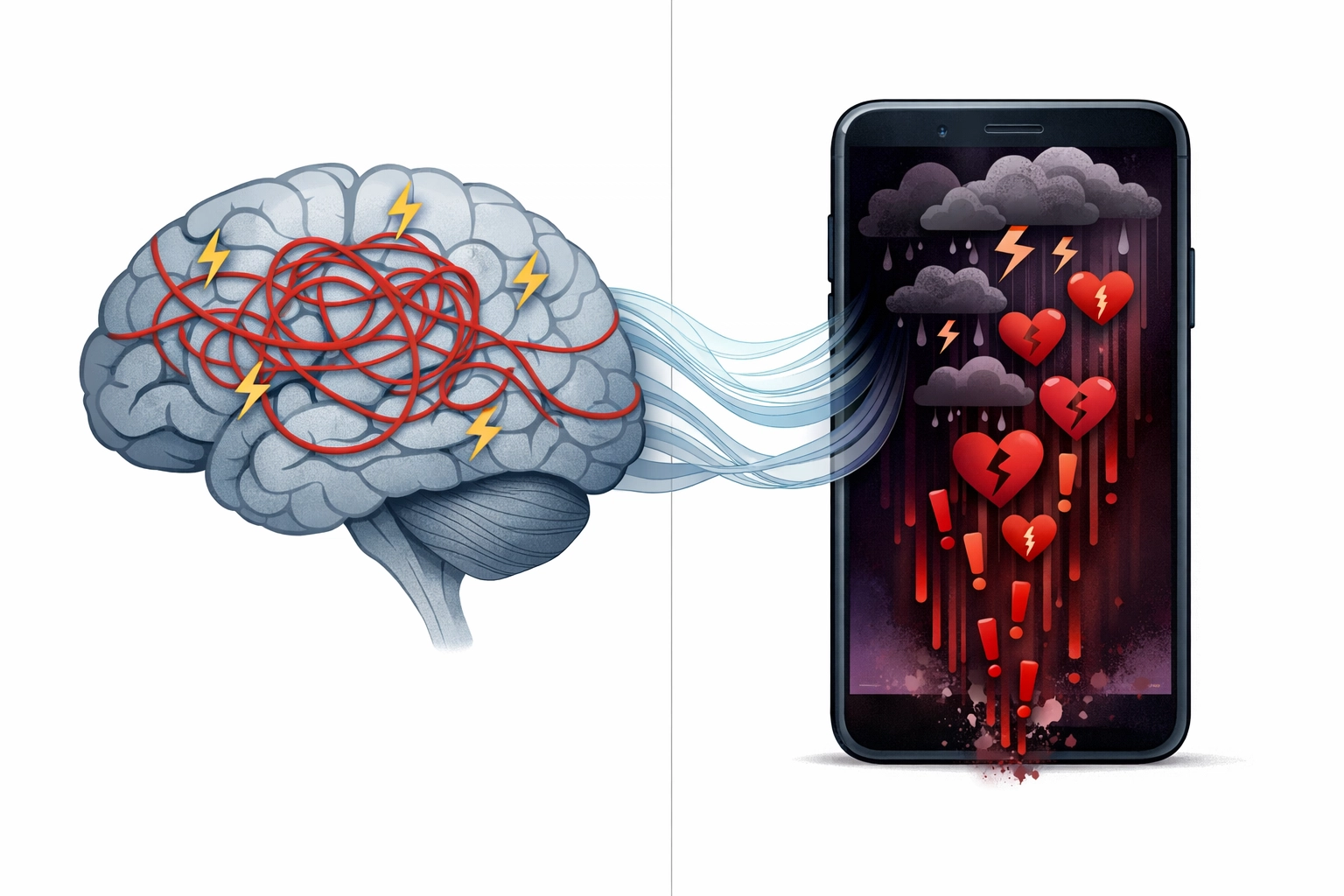
When we're constantly consuming negative content, our brains get stuck in threat-detection mode. We're evolutionarily designed to scan for danger: it's what kept our ancestors alive when saber-toothed tigers were a real concern. But our brains can't tell the difference between a physical threat and a terrible news headline about something happening thousands of miles away. The anxiety response is the same.
So we scroll, looking for threats. Finding them. Feeling that spike of cortisol and adrenaline. And then... we keep scrolling, because maybe the next post will have the solution, the good news, the thing that makes it all make sense.
Spoiler alert: it doesn't come.
What does come? Increased anxiety. Depression that settles in like fog. Stress that lives in your shoulders and jaw. For those of us already dealing with mental health stuff, it can trigger full-blown panic attacks. I've been there: heart racing, can't breathe, all because I spent three hours reading about things I have zero control over.
And here's the kicker: the research shows that prolonged exposure to negative content actually restricts our brain's ability to process good news. We get trapped in negative thinking patterns. Our attention span crumbles. Our ability to think critically about complex issues erodes because we're training our brains to expect bite-sized chunks of outrage instead of nuanced thought.
A 2024 study even found correlations between doomscrolling and existential anxiety: that deep, soul-level dread about the meaning of existence: and misanthropy, which is basically losing faith in humanity itself. Jesus. That's heavy.
The Trap Is Engineered (And That Makes Me So Angry)
Want to know what really pisses me off? This isn't accidental.
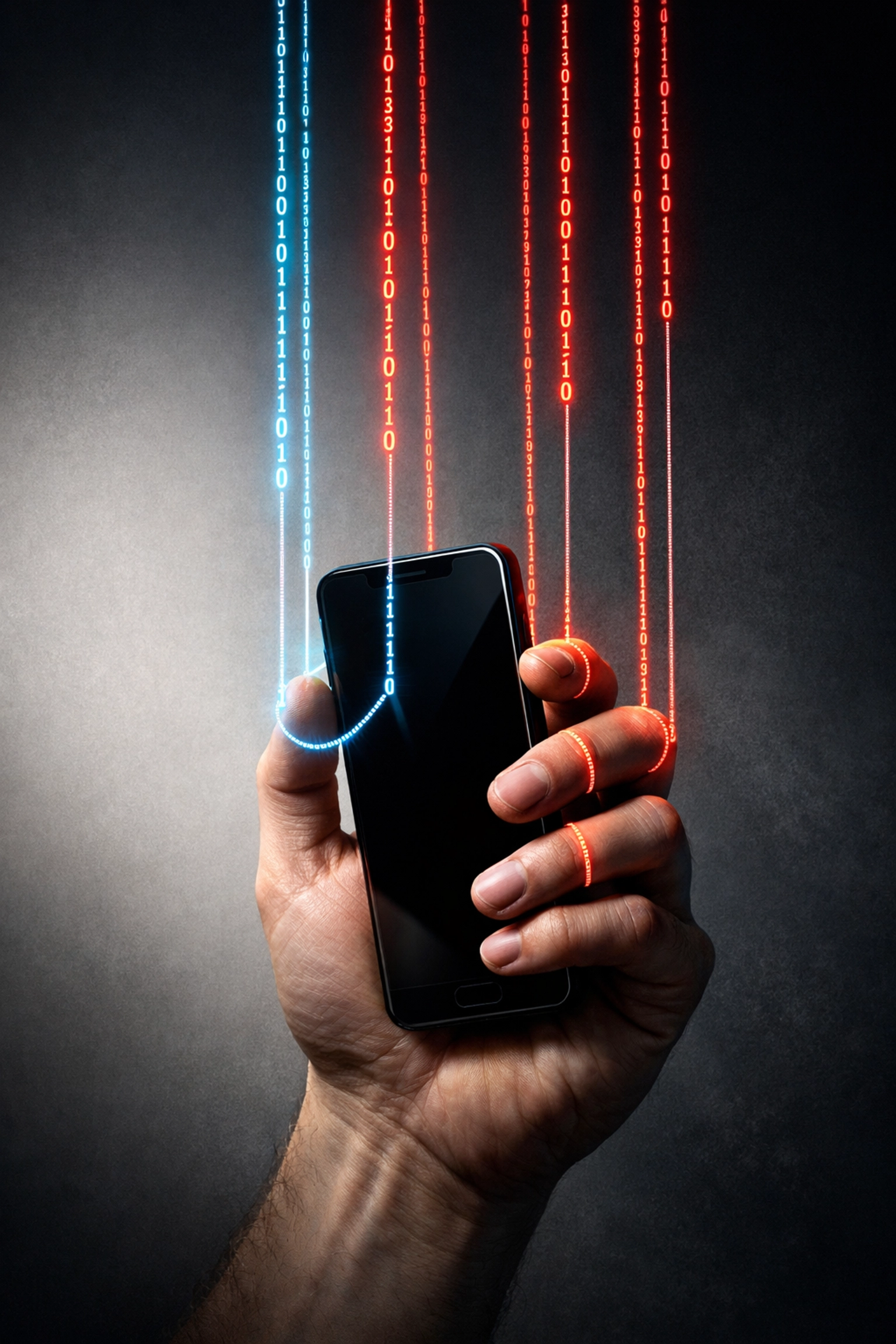
Social media platforms are designed: intentionally, carefully, with armies of engineers and psychologists: to keep us engaged. The longer we stay, the more ads we see. The more data they collect. The more money they make. It's that simple and that sinister.
And what keeps us engaged better than anything else? Emotional content. Specifically, negative emotional content. The algorithms have figured out that anger, fear, and outrage drive clicks and comments and shares. So that's what they feed us. That's what gets prioritized in our feeds.
We think we're choosing what to consume, but we're being fed a carefully curated diet of anxiety designed to keep us hungry for more.
It's such a shitty place to be: knowing you're being manipulated but feeling powerless to stop it.
Your Body Is Keeping Score
The mental toll is obvious, but can we talk about the physical stuff for a second? Because doomscrolling doesn't just mess with your head: it shows up in your body too.
Headaches. Nausea. That constant tension in your neck and shoulders from hunching over your phone. Elevated blood pressure. Loss of appetite (or the opposite: stress eating while scrolling). Sleep disturbances because you're flooding your system with stress hormones right before bed.
I've woken up with my phone in my hand more times than I want to admit, my neck kinked at some terrible angle, feeling like I got hit by a truck. And for what? To know seventeen more terrible things about the state of the world that I have no power to change?
Our bodies are trying to tell us something. The question is: are we listening?
So... Is There a Way Out?
Here's where I'm supposed to give you a neat list of "10 Easy Steps to Stop Doomscrolling Forever!" with some polished self-help nonsense, right?
Nah.
The truth is, breaking the doomscroll cycle is hard as hell. I'm not going to pretend I've got it all figured out, because I don't. Some days I do better. Some days I'm right back in the trap, thumb moving on autopilot through a feed of misery.
But there are things that help. Not perfect solutions, but real, messy, imperfect strategies that sometimes work:
Set actual boundaries. Not "I should probably use my phone less" but real ones. Delete apps that are the worst triggers. Use screen time limits that actually lock you out. Put your phone in another room when you go to bed. Physical distance helps.
Notice the feeling. When you reach for your phone, pause for just a second. What are you feeling? Anxious? Bored? Lonely? Sometimes just naming the emotion can break the automatic reach-scroll-spiral pattern.
Replace it with something else. This sounds simple, but it's not about willpower: it's about giving your brain something else to latch onto. Music. A podcast that doesn't make you want to scream. A book (remember those?). A walk, even a short one. Something that fills the space differently.
Give yourself grace. You're going to slip up. You're going to find yourself in a doomscroll at 2 AM despite your best intentions. That's okay. That's human. Don't pile shame on top of the anxiety: it doesn't help.
Connect with real people. I mean actually connect. Call someone. Text a friend something real, not just a meme. The algorithms want us isolated and anxious because that's when we're most vulnerable to manipulation. Real human connection is the antidote.
What We're Really Searching For
I think the hardest part about all this is recognizing what we're really doing when we doomscroll. We're not just seeking information. We're seeking control in a world that feels increasingly out of control. We're seeking connection in a culture of isolation. We're seeking meaning in the chaos.
And none of those are bad things to want. They're deeply human needs.
The tragedy is that doomscrolling promises to meet those needs while actually making them worse. It gives us the illusion of being informed while making us less able to think clearly. It offers connection while fostering isolation. It suggests we're doing something productive while we're actually paralyzed by overwhelm.
But here's what I'm learning, slowly and imperfectly: real control comes from choosing where we put our attention and energy. Real connection comes from vulnerability with people who see us. Real meaning comes from engaging with our actual lives, not the curated nightmare show in our feeds.
Moving Forward (Messily)
Look, I'm not going to end this by pretending I've got all the answers or that this is easy. It's not. We're living through genuinely difficult times, and the tools we use to cope are often the same ones making things worse.
But maybe awareness is the first step. Maybe just naming the trap: seeing it clearly for what it is: gives us a tiny bit of leverage to start climbing out.
We don't have to be perfect at this. We just have to be willing to try. To notice when we're stuck in the scroll. To make one different choice, even if we go right back to the pattern tomorrow.
Your soul: the part of you that's deeper than the algorithms can reach: deserves better than an endless feed of manufactured anxiety. You deserve better.
So maybe tonight, or tomorrow morning, or whenever you read this: put the phone down. Just for a minute. Breathe. Notice what you're feeling without judgment. And remember: the world is still turning, with or without your constant monitoring of it.
And maybe, just maybe, that's okay.
Written by Penny at Breathe N Bounce, where we're all just trying to figure this out together.
